
A car crash can happen in less than three seconds, but what you do in the minutes afterward can shape your health, your finances, and your legal options for years to come. Most people have never been in a serious collision and simply do not know what steps matter most when adrenaline is high and the scene feels chaotic. Understanding the legal and practical sequence of events ahead of time can help you protect yourself, gather the right evidence, and avoid costly mistakes.
This guide walks through exactly what happens, and what should happen, in the critical moments after impact.
Checking for Safety and Injuries First
The first legal and practical priority after any collision is safety, not blame. Before anything else, drivers should check themselves and passengers for injuries, then assess whether vehicles are drivable or need to stay put. Moving a car out of an active traffic lane, when it is safe to do so, can prevent a second collision and reduce liability exposure for causing additional harm.
Adrenaline often masks pain, so injuries like whiplash, concussions, or internal bruising may not be obvious right away. Even if everyone seems fine, it is worth watching closely for delayed symptoms such as headaches, stiffness, or dizziness over the following 24 to 48 hours.
- Turn on hazard lights immediately to alert other drivers.
- Check on passengers and occupants of other vehicles before assessing damage.
- Avoid moving anyone who reports neck or back pain unless they are in immediate danger.
- Set up flares or triangles if available, and it is safe to exit the vehicle.
Calling Emergency Services and Filing a Report

Once safety is addressed, calling 911 is usually the next step, even for a seemingly minor fender bender. Police involvement creates an official accident report, which becomes a foundational piece of evidence for insurance claims and any future legal disputes. Dispatchers can also send paramedics automatically, which matters if someone is injured but reluctant to admit it in the moment.
When officers arrive, they will typically interview each driver separately, note visible damage, and sometimes issue citations on the spot. It is important to answer questions honestly but briefly, without speculating about fault or apologizing in a way that could later be interpreted as an admission of liability. Ask for the responding officer’s name and badge number along with instructions on how to obtain a copy of the report.
Exchanging Information With the Other Driver
State laws generally require drivers involved in a collision to exchange certain information before leaving the scene. This exchange protects everyone involved and creates a paper trail that insurance companies and legal representatives will need later. Skipping this step, or leaving before it happens, can turn a routine accident into a hit-and-run charge with serious legal consequences.
- Full name, phone number, and address of the other driver.
- Insurance company name and policy number.
- Vehicle make, model, year, and license plate number.
- Driver’s license number if the other party is willing to share it.
- Contact information for any passengers or witnesses present.
Documenting the Scene With Photos and Notes
Evidence tends to disappear quickly after a crash, so documenting the scene while everything is fresh matters enormously for any later claim. Photos of vehicle damage, skid marks, traffic signals, road conditions, and license plates can all become critical when insurers or courts try to reconstruct what happened. Written notes made within an hour or two of the crash, while details are still sharp, often carry more weight than memories recalled weeks later.
Witnesses are another valuable but perishable resource. People who saw the collision often leave the scene quickly once police arrive, so asking for their name and phone number early is important. A short recorded statement from a witness, even on a phone, can later support the account given to insurers or investigators.
- Take wide shots showing the overall scene and close-ups of specific damage.
- Photograph any visible injuries as soon as possible.
- Note the time, weather, and lighting conditions at the moment of impact.
- Capture traffic signs, signals, or lane markings relevant to the crash.
Notifying Your Insurance Company Promptly
Most auto insurance policies require notification within a specific window, often 24 to 72 hours, so contacting the insurer soon after a crash is not optional if you want coverage to apply smoothly. When speaking with the adjuster, stick to factual details like time, location, and vehicle damage rather than offering opinions about who was at fault. Insurance companies record these calls, and vague or inconsistent statements can be used later to minimize a payout.
It also helps to ask the adjuster directly what documentation they will need, such as repair estimates, medical bills, or the police report number. Keeping a written log of every call, including the date and the representative’s name, creates a useful record if a dispute arises later. This early communication often sets the tone for how smoothly the rest of the claim process unfolds.
Understanding When Fault and Liability Get Determined
Fault is rarely decided at the scene of a crash, despite what drivers may assume in the heat of the moment. Instead, insurance adjusters, police reports, and sometimes accident reconstruction experts piece together evidence over days or weeks to determine liability. Comparative negligence laws in many states also mean that fault can be split between drivers rather than assigned entirely to one party.
This is often the point where consulting an auto accident attorney becomes worthwhile, particularly if injuries are involved or the other driver’s insurance company is disputing responsibility. An experienced attorney can help interpret how local traffic laws apply to the specific circumstances of the crash. Because insurance companies have their own legal teams working to limit payouts, having knowledgeable representation early can prevent a driver from unintentionally weakening their own case.
Deciding Whether to Seek Medical Evaluation Right Away
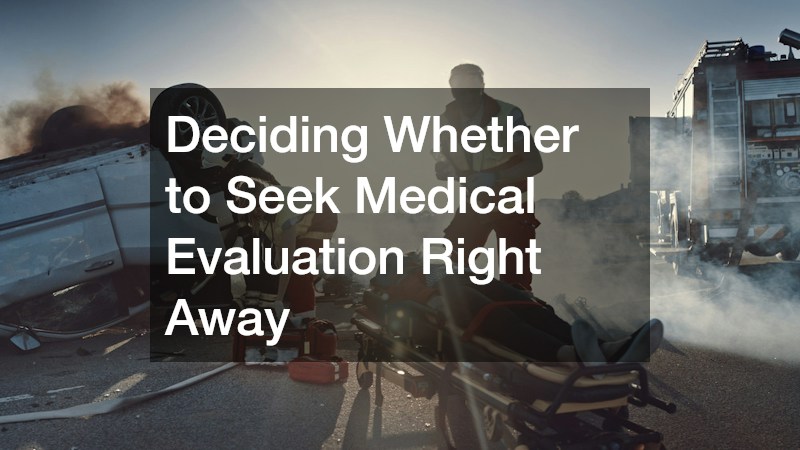
Even minor collisions can cause soft tissue injuries that do not produce symptoms until hours or days later, which is why prompt medical evaluation matters both for health and for legal reasons. Emergency rooms and urgent care clinics create timestamped medical records that directly link injuries to the crash, which becomes important if a claim is ever contested. Waiting too long to see a doctor can give an insurance company grounds to argue that the injury was unrelated to the accident.
For anyone dealing with lingering pain, medical bills, or lost wages after a crash, speaking with a personal injury attorney early can clarify what compensation may be available. In more serious cases involving long-term injury, a car accident lawyer can help calculate damages that go beyond the obvious medical expenses, including future treatment and reduced earning capacity. Getting this guidance sooner rather than later often protects both a person’s health and their legal claim.
Avoiding Common Mistakes in the Immediate Aftermath
Certain reactions in the minutes after a crash can unintentionally damage a person’s legal standing, even when they are not at fault. A reflexive “I’m sorry” said while checking on the other driver can later be recast as an admission of fault, even when it was simply an expression of concern. Insurance adjusters and opposing attorneys often comb through recorded statements and witness recollections looking for exactly this kind of language.
Social media poses a similar risk. A post describing the crash, a photo from the scene, or even an unrelated update showing the person out and about can be used to suggest their injuries aren’t as serious as claimed. Insurers routinely monitor public profiles during claims investigations, so many attorneys advise staying off social media entirely until a case is resolved. Agreeing to a quick cash settlement at the scene is another common misstep. These on-the-spot offers are typically far below what an injury claim may actually be worth, especially since some injuries, like whiplash or internal trauma, don’t show symptoms until hours or days later.
Once accepted, such settlements are difficult or impossible to reverse, even if new damages surface afterward. Other frequent errors include moving vehicles before police arrive when it isn’t necessary for safety, failing to document the scene with photos, or giving a recorded statement to an insurance company without first understanding how it might be used. Each of these seemingly small decisions can be leveraged later to reduce or deny a claim.
- Do not admit fault or speculate about causes while emotions are still high — even saying “sorry” can be twisted into an admission of liability.
- Avoid discussing the crash on social media until the claim is resolved, since insurers routinely scan posts and photos for evidence to dispute injury claims.
- Never sign documents from the other driver’s insurer without review, especially early settlement offers or medical authorization releases.
- Do not skip medical care simply because pain has not yet appeared; adrenaline can mask injuries like whiplash or concussions for 24-72 hours.
- Keep all crash-related paperwork organized in one place from the start, including the police report, medical bills, repair estimates, and correspondence with insurers.
- Avoid giving a recorded statement to the other party’s insurance company before consulting an attorney.
- Do not accept the first settlement offer without understanding its full value against future medical costs and lost wages.
Conclusion
The minutes following a collision are chaotic, but they also set the stage for everything that follows, from insurance payouts to potential legal claims. Prioritizing safety, documenting thoroughly, and seeking medical attention promptly all protect both your well-being and your legal rights. When fault is disputed, or injuries turn out to be more serious than expected, reaching out to an injury lawyer can help ensure the process moves forward fairly. Taking these steps calmly and deliberately, even under stress, puts you in the strongest possible position going forward.